
Hot Runner vs. Cold Runner: Meto Helps You Make the Right Choice for Preform Molds
Hot Runner vs. Cold Runner: Meto Helps You Make the Right Choice for Preform Molds
Every preform mold needs a way to move molten PET from the injection machine to each cavity. The runner system is that pathway. And the choice between hot runner and cold runner has real consequences for your material cost, cycle time, and daily operations.
Neither system is universally better. But one system is almost certainly better for your specific production situation. This article cuts through the marketing claims and gives you a practical framework to decide.
Meto builds both types. We will help you choose what fits your factory.
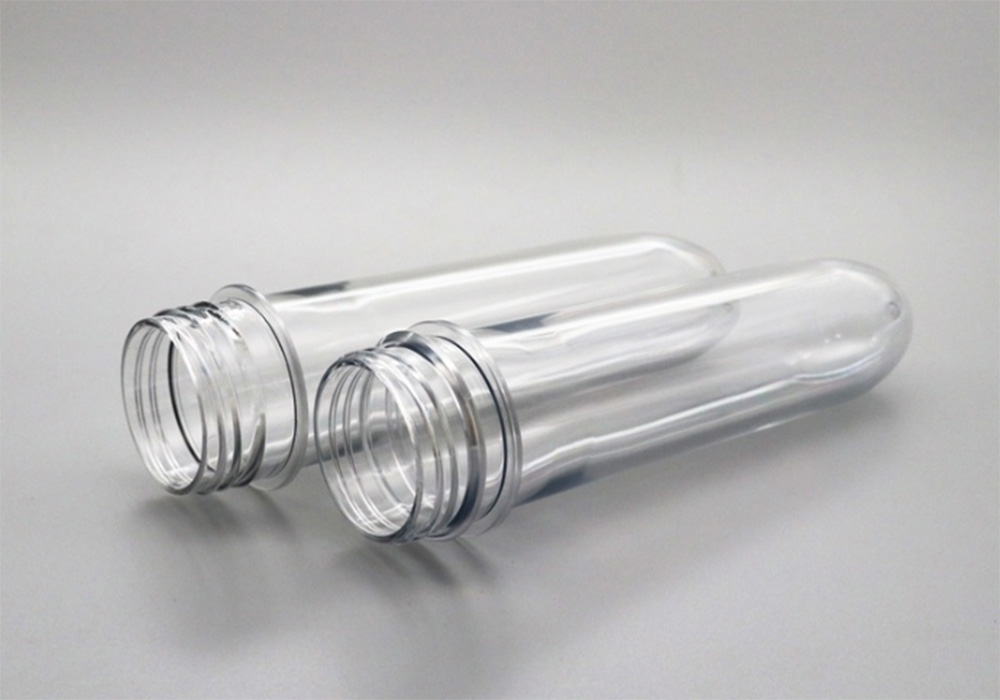
Part 1: One Sentence Definitions
Cold runner: The channels that carry plastic are not heated. The runner solidifies with each cycle and comes out with the preforms as a tree-like piece of waste plastic.
Hot runner: The channels are heated. The plastic stays molten inside the mold. Only the preforms come out. No runner waste.
That is the core difference. Everything else follows from it.
Part 2: The Real Cost Difference
Most buyers focus on the mold price. They should focus on total cost per preform.
Cold Runner Total Cost
| Cost Component | Impact |
|---|---|
| Mold price | Lower |
| Material waste | 15–30% of your PET becomes runner scrap |
| Regrind handling | Requires granulator, storage, blending equipment |
| Cycle time | Slower (runner must cool) |
| Labor | Someone must separate preforms from runners |
| Energy | Melting the runner material every cycle |
Hot Runner Total Cost
| Cost Component | Impact |
|---|---|
| Mold price | Higher (heaters, controllers, precision manifold) |
| Material waste | Zero |
| Regrind handling | Not needed |
| Cycle time | Faster (no runner cooling delay) |
| Labor | No separation required |
| Energy | Less energy per preform (no reheating runner material) |
The math is simple: If you run enough preforms, the material and cycle time savings from a hot runner quickly exceed the higher mold cost.
Part 3: The Decision Table
Ask yourself these three questions. The answer will be obvious in most cases.
Question 1: How many preforms do you make per year?
| Annual Preform Volume | Verdict |
|---|---|
| Less than 5 million | Cold runner. You will never recover the hot runner premium. |
| 5 million to 15 million | Calculate it. The numbers will tell you. |
| More than 15 million | Hot runner. The material savings alone justify it. |
Question 2: How many cavities do you need?
| Cavitation | Verdict |
|---|---|
| 2 to 8 cavities | Cold runner. Hot runner complexity is unnecessary. |
| 8 to 16 cavities | Either can work. Look at volume and change frequency. |
| 16+ cavities | Hot runner. Cold runner filling becomes inconsistent above 16 cavities. |
Question 3: How often do you change colors or materials?
| Change Frequency | Verdict |
|---|---|
| Daily or multiple times per week | Cold runner. Hot runner color changes are slow and wasteful. |
| Weekly or monthly | Either. Hot runner with good purging design works. |
| Rarely (same resin, same color) | Hot runner. Maximize efficiency. |
Part 4: Three Real Scenarios
Scenario A: The Small Bottler
Profile: 4 million preforms per year, one shift, basic maintenance staff, changes color every 3 days
Right choice: Cold runner
Why: The hot runner would cost 40% more upfront. Material savings would be only 20,000 per year. Payback period would exceed 3 years. The cold runner is simpler, easier to maintain, and faster for color changes.
Meto recommendation: 8-cavity cold runner mold. No regrind equipment needed — they sell the runner scrap to a recycler.
Scenario B: The Regional Brand
Profile: 25 million preforms per year, 3 shifts, skilled technicians, same color year-round
Right choice: Hot runner
Why: Material waste from a cold runner would be 200–300 tons of PET per year. At 200,000–$300,000 in wasted material. The hot runner premium pays back in 4–6 months. After that, pure savings.
Meto recommendation: 32-cavity hot runner mold with valve gates. Clean gate marks. No regrind handling.
Scenario C: The Contract Molder
Profile: 12 million preforms per year, runs 5 different preform designs, changes over weekly
Right choice: Either, but with specific compromises
Why: Volume is borderline. Weekly changes mean purging a hot runner takes 30–45 minutes each time. A cold runner would waste material but change faster.
Meto recommendation: Hot runner with rapid-purge manifold design. Accept the longer changeover time in exchange for material savings. The numbers show a 9-month payback.
Part 5: What Each System Requires From You
Beyond cost and volume, be honest about what your factory can actually support.
Cold Runner Requires:
Space for a granulator (if you regrind)
Discipline to manage regrind ratios (typically 10–30%)
Someone to separate preforms from runners (manual or automatic)
Acceptance of visible gate marks on preforms
Hot Runner Requires:
Technician who understands heater control, thermocouples, and valve pin timing
Machine with adequate hot runner control interface
Time for proper startup (30–60 minutes to reach thermal equilibrium)
Patience for color changes (purging required)
If you do not have the technical capability for hot runner maintenance, do not buy one. A poorly maintained hot runner is worse than a cold runner.
Part 6: The Gate Mark Question
One detail that matters for some customers: the gate mark.
Cold runner gate mark: Left where the runner attached to the preform. Usually a small protrusion. May require trimming for cosmetic applications. Visible but functional.
Hot runner valve gate mark: A clean, flat circle where the valve pin closed. No protrusion. No trimming needed. Preferred for high-glass cosmetic preforms or when gate appearance matters.
If your preforms go into clear, high-end cosmetic bottles, the hot runner‘s clean gate is a real advantage. If your preforms become water bottles with labels covering the gate area, it does not matter.
Part 7: A Simple ROI Calculation
Use this formula to estimate hot runner payback for your situation.
Annual material savings = (Runner weight per shot) × (Cycles per year) × (PET cost per kg)
Example:
| Factor | Value |
|---|---|
| Runner weight per shot (16 cavities) | 0.08 kg |
| Cycles per year (3 shifts, 250 days) | 1,500,000 |
| PET cost per kg | $1.00 |
| Annual material savings | 0.08 × 1,500,000 × 120,000 |
Hot runner premium cost (16-cavity): Approximately 30,000
Payback period: 120,000 = 2.5 months
If your volume is lower, the payback period lengthens. At 5 million cycles per year, payback would be approximately 7–8 months. At 2 million cycles per year, payback exceeds 2 years — cold runner becomes more attractive.
Part 8: Meto‘s Practical Advice
After fifteen years of building both systems, here is what Meto has learned:
Choose cold runner when:
You run fewer than 10 million preforms per year
You change colors weekly or more often
Your maintenance team has no hot runner experience
Your machine does not have hot runner control capability
You are budget-constrained on mold investment
Choose hot runner when:
You run more than 15 million preforms per year
You rarely change color or material
You have or can develop hot runner technical skills
Your machine supports hot runner control
You want the lowest per-preform cost at scale
When in doubt: Run the numbers. Meto will help you calculate material savings, cycle time improvements, and payback period for your specific volume and material cost. No bias. Just math.
Conclusion: Match the Technology to Your Reality
Hot runner and cold runner are both mature technologies. Both produce good preforms. Both have a place in the market.
The mistake is choosing based on what someone else does. A large bottler running 48 cavities and 100 million preforms per year needs a hot runner. A small water company running 8 cavities and 3 million preforms per year does not.
Meto builds both. We will help you choose the system that matches your volume, your people, and your business.
Ruby
We can provide you with high-quality PET preform molds,cap molds,and blow molding machines.Looking forward to communicating and cooperating with you!
Helpline and Support
008613757660057