
From Design to Trial Molding: Meto Cap Mold Full Process Quality Control
From Design to Trial Molding: Meto Cap Mold Full Process Quality Control
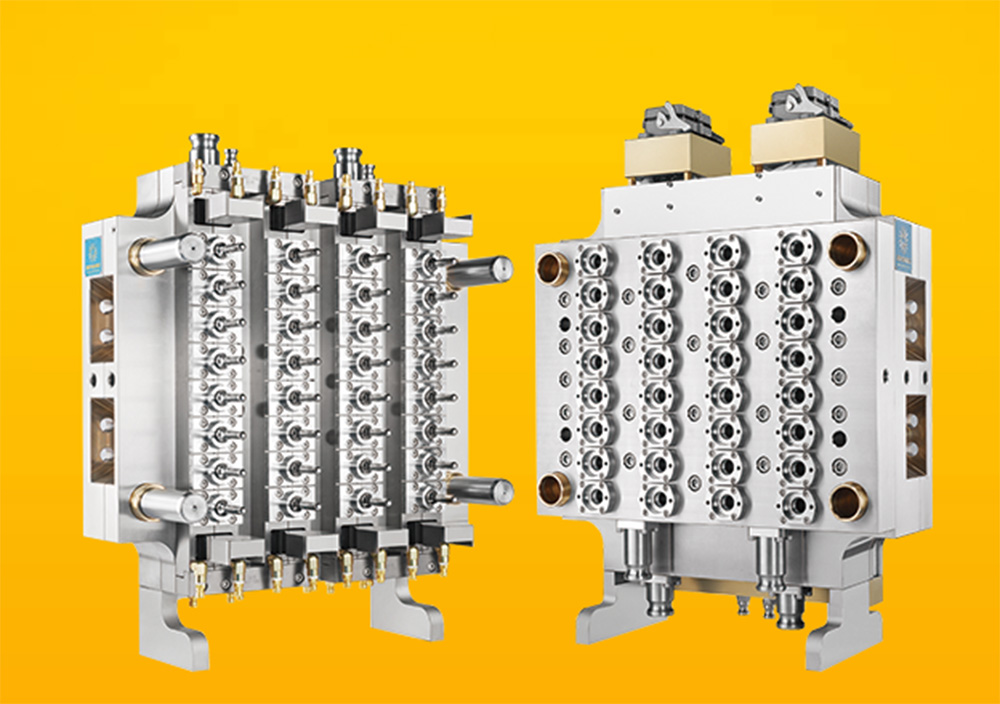
A bottle cap mold is a precision tool. A small error in thread angle causes cap leakage. A small error in cooling causes longer cycle time. A small error in steel selection causes early mold failure. Quality cannot be inspected into a mold at the end. Quality must be built into every step from design to delivery. This article explains Meto's full process quality control for cap molds. Every step is documented. Every step is verified. Nothing is left to chance.
Part 1: Design Phase Quality Control
The quality of a cap mold begins with design. Meto engineers follow a structured design process.
Step 1: Customer Requirement Review
Before any design work begins, Meto reviews the customer's cap drawing or sample. Key items checked are cap diameter and height, thread type and dimensions, sealing surface geometry, tamper evident band design if applicable, hinge design for flip top caps if applicable, material type such as HDPE, PP, or PET, and target annual volume.
Step 2: 3D Modeling
Meto engineers create a complete 3D model of the mold assembly. This includes the cavity and core, thread unscrewing mechanism, cooling channels, ejector system, and hot runner if applicable. The 3D model is shared with the customer for review and approval.
Step 3: Mold Flow Analysis
Meto performs mold flow analysis on every cap mold. The analysis shows how molten plastic fills the cavity. It identifies potential problems such as air traps, weld lines, and uneven fill. Engineers adjust gate location and size based on analysis results.
Step 4: Cooling Simulation
Meto uses CFD or computational fluid dynamics to simulate cooling. The simulation shows temperature distribution across the cavity. Engineers optimize cooling channel placement to achieve uniform cooling. Uniform cooling means faster cycles and consistent cap dimensions.
Step 5: Design Review Meeting
Before manufacturing begins, Meto holds a design review meeting with the customer. The meeting covers the 3D model, mold flow analysis results, cooling simulation results, expected cycle time, and expected mold life. The customer approves the design before any steel is cut.
Part 2: Material Selection and Incoming Inspection
Steel quality determines mold life. Meto uses only certified steel from reputable mills.
Standard Steel Grades
For standard high volume cap molds, Meto uses 1.2343 H11 steel with expected life of 5 to 7 million cycles. For extreme wear applications especially thread areas, Meto uses 1.2767 steel with expected life of 7 to 10 million cycles. For cosmetic and food contact caps, Meto uses 1.2083 stainless steel with expected life of 6 to 8 million cycles.
Incoming Steel Inspection
Every steel block undergoes inspection before machining. Inspection includes spectrometer analysis to verify chemical composition, ultrasonic testing to detect internal flaws, and hardness check to verify as received condition. Steel that fails inspection is rejected and returned to the mill. No exceptions.
Part 3: Machining Quality Control
Meto uses CNC machining centers with precision of plus or minus 0.005 millimeters.
Rough Machining
Steel blocks are rough machined to within 1 millimeter of final dimensions. This removes the outer layer and exposes any hidden defects. Rough machined components are inspected before moving to finish machining.
Stress Relieving
After rough machining, components undergo stress relieving heat treatment. Temperature is 500 to 650 degrees Celsius depending on steel grade. Soak time is 2 to 4 hours. Cooling is slow furnace cool. Stress relieving removes residual stresses that could cause distortion during final machining or operation.
Finish Machining
Components are finish machined to final dimensions. Critical surfaces are machined last to maintain precision. In process inspection occurs every 2 hours. CMM or coordinate measuring machine checks are performed after critical operations.
Thread Grinding
Cap threads require special precision. Meto uses thread grinding instead of standard machining for thread surfaces. Thread grinding achieves accuracy of plus or minus 0.01 millimeters. Surface finish after grinding is Ra 0.1 to 0.2 microns.
Part 4: Heat Treatment Quality Control
Heat treatment transforms soft steel into hard wear resistant tooling. Meto performs all heat treatment in house using vacuum furnaces.
Vacuum Heat Treatment Process
The process begins with preheating at 650 degrees Celsius for 30 minutes. Next is austenitizing at 1020 to 1050 degrees Celsius for 45 to 60 minutes. High pressure gas quenching follows with nitrogen at 5 to 10 bar. First temper is at 560 to 580 degrees Celsius for 2 hours. Second temper is at 540 to 560 degrees Celsius for 2 hours. Double tempering ensures stable microstructure and prevents brittleness.
Hardness Testing
After heat treatment, every cavity is hardness tested. Testing uses the Rockwell C scale. Three points are tested on each cavity. Acceptance range is target plus or minus 2 HRC. Hardness results are documented by cavity number. Components outside the acceptance range are re heat treated or rejected.
Part 5: Surface Finishing Quality Control
Surface finish affects cap release and appearance.
Polishing
Meto polishes all cavity surfaces. Standard finish is Ra 0.2 to 0.4 microns. For cosmetic caps, mirror finish of Ra 0.05 to 0.1 microns is available. Surface finish is measured with a profilometer. Results are documented.
Surface Treatment
For extreme wear applications, Meto offers plasma nitriding. Nitriding adds surface hardness of 900 to 1100 HV while maintaining core hardness. Case depth is 0.1 to 0.3 millimeters. For cosmetic caps requiring high gloss, Meto offers mirror polishing without additional coating.
Part 6: Assembly Quality Control
Mold assembly requires precision and cleanliness.
Component Cleaning
All components are cleaned before assembly. Cleaning removes machining oil, grinding dust, and metal particles. Cleaned components are inspected under magnification for surface defects.
Assembly Process
Meto assembles each mold on a clean work surface. Guide bushings and pins are installed and checked for smooth movement. The unscrewing mechanism is assembled and tested for smooth operation. Cooling circuits are connected and pressure tested. Hot runner components are installed and electrical connections are verified.
Assembly Inspection
After assembly, the mold undergoes final inspection. Inspection includes guide pillar and bushing alignment, ejector plate movement and return, unscrewing mechanism timing, cooling circuit flow and pressure, and hot runner electrical continuity. Any issue found is corrected before trial molding.
Part 7: Trial Molding Quality Control
Trial molding is the final verification step. No mold ships without trial molding.
Trial Molding Setup
Meto mounts the mold on a production grade injection molding machine. The machine is similar to what the customer uses. Material is standard grade matching customer specifications. Process parameters are set based on mold flow analysis.
Trial Molding Process
The mold runs for at least 100 cycles to reach thermal equilibrium. Operators collect 30 consecutive cycles of sample caps. Sample caps are inspected for visual defects such as splay, bubbles, short shots, and flash. Sample caps are measured for critical dimensions including thread profile, sealing surface diameter, cap height and diameter, and tamper evident band bridge thickness.
Cap Performance Testing
Meto performs application torque testing on sample caps using a torque meter. Removal torque is also measured. For caps with tamper evident bands, Meto tests band break torque and verifies clean break without debris. For flip top caps, Meto tests hinge durability by opening and closing 1000 times. For child resistant caps, Meto tests the dual motion mechanism.
Preform Compatibility Testing
If the customer provides preforms, Meto applies sample caps to preforms. Sealing is tested using vacuum or pressure decay method. Torque is measured on the applied caps. Results are documented in a compatibility report.
Trial Molding Report
Meto provides a trial molding report to the customer. The report includes process parameters used such as temperatures, pressures, and speeds, cycle time achieved, visual inspection results for each cavity, dimensional measurement data for each cavity, torque test results, sealing test results, and sample caps or high resolution photos.
A mold does not ship until the trial molding report shows acceptable results.
Part 8: Documentation and Delivery
Every Meto cap mold ships with complete documentation.
Standard Documentation Package
The package includes mill certificates for all steel used, heat treatment report showing time and temperature chart, hardness test report showing results for every cavity, CMM inspection report showing critical dimensions, trial molding report with sample data, illustrated maintenance guide with lubrication points and torque specifications, spare parts list with part numbers and lead times, and troubleshooting guide for common issues.
Packaging and Shipping
Meto cleans the mold before packaging. Anti rust oil is applied to all steel surfaces. VCI paper is wrapped around the mold. The mold is secured in an ISPM 15 certified wooden crate. Commercial invoice and packing list are attached to the outside. The crate is shipped by air freight or sea freight based on customer choice.
Part 9: After Delivery Quality Support
Quality control continues after the mold arrives at customer facility.
Remote Commissioning
Meto provides remote commissioning support via video call. Engineers guide customer operators through first installation, cooling and hot runner connection, initial startup and parameter setting, and first production quality check.
On Site Commissioning
For customers who request it, Meto can send an engineer to the customer facility. On site commissioning includes mold installation and alignment verification, process parameter optimization, operator training, and maintenance training. On site commissioning typically takes 2 to 3 days.
Ongoing Support
Meto provides 48 hour shipping for standard spare parts. Technical support is available by email, phone, and video call. Refurbishment services are available when the mold needs thread recutting or cavity repolishing.
Part 10: Continuous Improvement
Meto uses customer feedback to improve quality.
Data Collection
Every mold has a serial number. Meto tracks each mold's performance including cycle time achieved, reject rate reported, maintenance history, and mold life in cycles.
Design Updates
When Meto identifies a recurring issue, the design is updated. Examples include improved cooling channel layout for better uniformity, stronger unscrewing mechanism components for longer life, and optimized gate location for faster fill. All design updates are applied to future molds.
Customer Feedback Loop
Meto contacts customers annually to ask about mold performance. Customers are encouraged to share problems and suggestions. Feedback is reviewed by Meto engineers and used to improve quality.
Conclusion
Quality in cap mold manufacturing is not an accident. It is the result of deliberate control at every step from design to delivery. Meto's full process quality control includes design review and simulation, certified steel and in house heat treatment, precision machining and thread grinding, surface finishing and coating, careful assembly and inspection, trial molding with documented results, complete documentation package, and ongoing support after delivery.
When you buy a cap mold from Meto, you are not buying a tool. You are buying a complete quality system that delivers millions of consistent caps.
Contact Meto today to discuss your cap mold requirements. Send your cap drawing. We will respond with a quality plan and quotation.

Ruby
We can provide you with high-quality PET preform molds,cap molds,and blow molding machines.Looking forward to communicating and cooperating with you!
Helpline and Support
008613757660057