
Preform Plus Cap Plus Blow Mold: Meto Three Packaging Mold Integrated Solution
Preform Plus Cap Plus Blow Mold: Meto Three Packaging Mold Integrated Solution
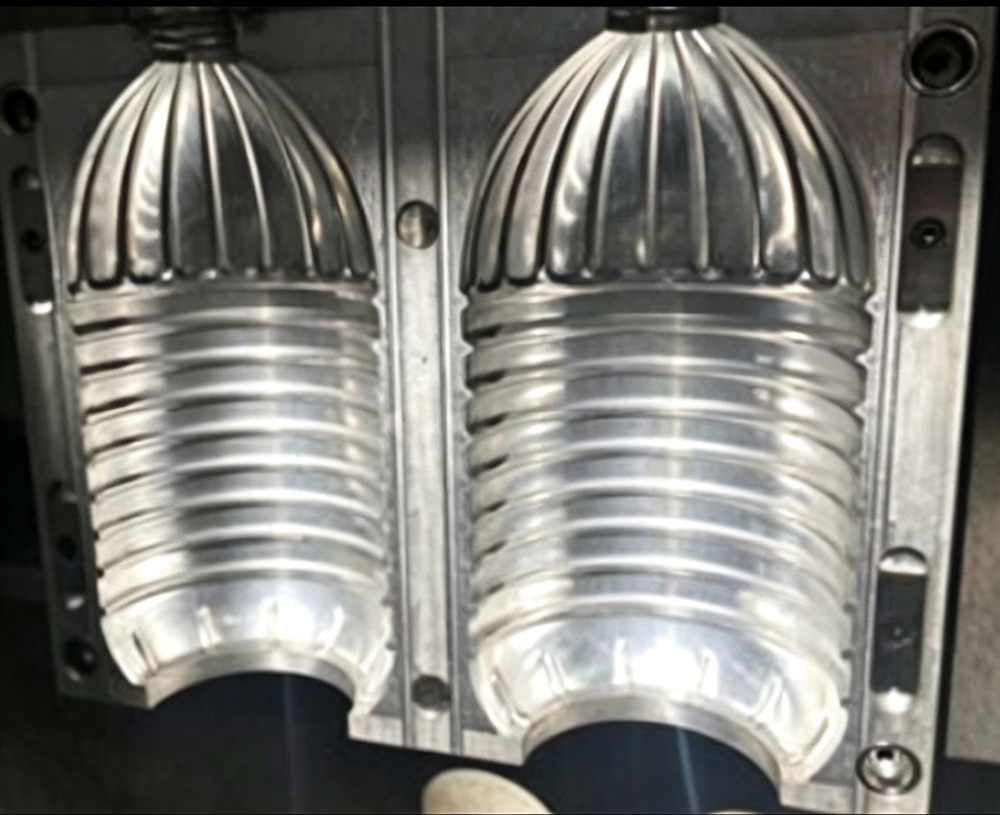
A bottle packaging line has three critical mold components. The preform mold creates the preform. The cap mold creates the cap. The blow mold creates the final bottle from the preform. These three molds must work together perfectly. If they do not, the line stops.
Most mold manufacturers specialize in only one of these three. A preform mold maker knows preforms but not caps. A cap mold maker knows caps but not blow molds. A blow mold maker knows bottles but not preforms. This creates problems. Preforms and blow molds are designed separately. Caps and preform necks do not match perfectly. The factory is left to solve compatibility problems.
Meto is different. We design and manufacture all three mold types. Preform molds. Cap molds. Blow molds. And we design them to work together as a system. This article explains the Meto three mold integrated solution.
Part 1: The Problem with Separate Suppliers
When three different suppliers provide the three molds, problems are common.
First, neck finish mismatch. The preform neck finish must match the cap threads perfectly. Separate suppliers use different measurement standards. The cap may be too tight or too loose. Either way, the seal fails.
Second, preform to blow mold mismatch. The preform shape must match the blow mold cavity. If the preform is too long or too short for the blow mold, bottles have thin spots or thick spots. Quality suffers.
Third, tolerance stack up. Each supplier holds their own tolerances. The preform supplier holds plus or minus 0.02 millimeters. The cap supplier holds plus or minus 0.02 millimeters. The worst case combination is plus or minus 0.04 millimeters. This may be out of specification.
Fourth, finger pointing. When problems occur, each supplier blames the others. The preform supplier says the cap is wrong. The cap supplier says the preform is wrong. The factory loses production while suppliers argue.
Fifth, longer validation time. The factory must validate each mold separately. Then validate the combinations. This takes weeks or months.
Part 2: The Meto Integrated Solution
Meto provides all three molds from a single source. Preform mold. Cap mold. Blow mold. Designed together. Built together. Tested together. Shipped together or on a coordinated schedule.
One design team controls all interfaces. The same engineers design the preform neck and the cap threads. The same engineers design the preform body and the blow mold cavity. There is no finger pointing. There is only one responsible supplier.
Part 3: The Three Mold Types
Preform Mold
Meto preform molds are available from 2 to 48 cavities. Steel grades include H11 for standard production and stainless for rPET. Cooling can be conformal for faster cycles. Hot runner with valve gate is standard for high cavitation. Weight variation is guaranteed at 0.3 percent or less.
Cap Mold
Meto cap molds are available from 16 to 64 cavities. Cap types include screw caps, tamper evident caps, flip top caps, and child resistant caps. Thread precision is within plus or minus 0.015 millimeters. Unscrewing mechanism is hydraulic rack and pinion or servo motor.
Blow Mold
Meto blow molds are available for both stretch blow molding PET bottles and extrusion blow molding for larger containers. Cavities range from 2 to 24. Conformal cooling is available for faster cycles. Quick change systems allow fast bottle size changes.
Part 4: The Key Interfaces
Three interfaces determine whether the system works or fails.
Interface one is preform neck to cap. The cap threads must match the preform neck threads exactly. The sealing surface on the preform must align with the sealing membrane or liner in the cap. The tamper evident band groove must match the band hook on the cap.
Interface two is preform neck to blow mold neck ring. The blow mold neck ring holds the preform during stretching and blowing. The neck ring must match the preform neck finish exactly. Any mismatch causes preform misalignment and bottle defects.
Interface three is preform body to blow mold cavity. The preform shape determines how the bottle blows. The preform must have the correct length, diameter, and wall thickness distribution for the blow mold cavity. Meto designs both together.
Part 5: Coordination During Design
When a customer orders all three molds from Meto, the design process is coordinated.
Step one is bottle specification. The customer provides the target bottle volume, shape, and material. Meto uses this to design the blow mold cavity.
Step two is preform design. Based on the blow mold cavity, Meto designs the preform. The preform length, diameter, and wall thickness are calculated to achieve the target bottle shape.
Step three is neck finish selection. The neck finish must match the customer's capping line. Meto selects a standard neck finish such as PCO 1881 or PCO 1810 or designs a custom finish.
Step four is cap design. Based on the neck finish, Meto designs the cap. Threads match exactly. Sealing surface geometry is coordinated. Tamper evident band dimensions are matched.
Step five is simulation. Meto runs mold flow analysis for the preform mold and cap mold. Meto runs blow simulation for the blow mold. All three are verified together.
Step six is design review. Meto presents all three designs to the customer in a single review meeting. The customer approves all three together.
Part 6: Coordination During Manufacturing
After design approval, manufacturing begins. Meto schedules production so all three molds are ready at the appropriate time. For a new line, all three molds are needed at the same time. Meto coordinates shipping accordingly.
Quality control is consistent across all three mold types. The same measurement standards apply. The same documentation standards apply. The same steel grades are used where appropriate.
Part 7: Coordination During Testing
Before any mold ships, Meto performs testing.
The preform mold is trial molded. Preform dimensions are measured. Weight variation is verified. Sample preforms are kept.
The cap mold is trial molded. Cap dimensions are measured. Thread profile is verified. Torque is tested. Sample caps are kept.
The blow mold is trial molded using preforms from Meto's preform mold. Sample bottles are blown. Bottle dimensions are measured. Wall thickness distribution is verified.
Then Meto applies caps from the cap mold to bottles from the blow mold. Torque is tested again. Sealing is tested. Tamper evident band function is verified.
Only after all three tests pass does Meto prepare the molds for shipment.
Part 8: Benefits of the Integrated Solution
Benefit one is guaranteed compatibility. Meto guarantees that caps from the cap mold will seal on preforms from the preform mold. Meto guarantees that preforms from the preform mold will blow correctly in the blow mold.
Benefit two is faster validation. The factory does not need to test compatibility. Meto has already done it. Line validation time is reduced by 50 to 70 percent.
Benefit three is single point of contact. One salesperson. One engineer. One invoice. One shipping notification. One technical support line. The factory spends less time managing suppliers.
Benefit four is coordinated spare parts. Many components are common across mold types. Guide bushings, ejector pins, and cooling fittings may be the same. One spare parts kit supports all three molds.
Benefit five is faster troubleshooting. When a problem occurs, the factory calls one number. Meto engineers understand the whole system. They do not need to coordinate between separate suppliers.
Part 9: Real Customer Example
A beverage company in Southeast Asia was building a new production line for 500 milliliter PET water bottles. They needed a preform mold, a cap mold, and a blow mold.
Before Meto, they planned to buy from three different suppliers. Preform mold from a domestic supplier. Cap mold from a European supplier. Blow mold from another Asian supplier. The total cost was 120,000 US dollars. Estimated delivery was 16 to 20 weeks with separate shipments.
They contacted Meto for a quotation on all three molds. Meto price was 95,000 US dollars. Delivery was 12 weeks with all three molds shipped together.
The customer chose Meto. The molds arrived together. Installation took one week with Meto on site support. The line started production on schedule. Preforms and caps sealed perfectly. Bottles were within specification. The customer saved 25,000 US dollars and 4 to 8 weeks of waiting.
Part 10: Cost Comparison
Buying from separate suppliers has hidden costs. Compatibility testing costs money. If a preform does not fit a blow mold, someone must pay for modifications. If caps do not seal, someone must pay for new thread inserts.
The Meto integrated solution includes compatibility testing as part of the price. There are no extra charges for making the molds work together.
Here is a typical cost comparison for a complete set of three molds for a high volume PET water line.
Separate suppliers preform mold costs 45,000 US dollars. Separate cap mold costs 40,000 US dollars. Separate blow mold costs 25,000 US dollars. Total is 110,000 US dollars. Compatibility testing and modifications add 10,000 to 20,000 US dollars. Total with separate suppliers is 120,000 to 130,000 US dollars.
Meto integrated solution preform mold costs 40,000 US dollars. Cap mold costs 35,000 US dollars. Blow mold costs 22,000 US dollars. Total is 97,000 US dollars. Compatibility testing is included. No extra cost.
The Meto integrated solution saves approximately 25,000 to 35,000 US dollars for a complete three mold set.
Part 11: Delivery Coordination
Separate suppliers deliver at different times. The preform mold may arrive in 12 weeks. The cap mold in 16 weeks. The blow mold in 10 weeks. The line cannot start until all three are present. The factory waits for the slowest supplier.
Meto coordinates delivery. For new lines, all three molds ship together. The factory receives everything at once. Installation and validation happen once, not three times.
For line expansion where only one mold type is needed, Meto ships individually. The customer decides the schedule.
Part 12: Technical Support Coordination
When separate suppliers provide support, the factory must manage multiple relationships. Each supplier has different contact methods, different documentation formats, and different response times.
Meto provides a single support team. One phone number. One email address. One set of documentation. The same engineer who designed the molds can answer questions about any of them.
Part 13: Spare Parts Coordination
Separate suppliers mean separate spare parts inventories. Preform mold bushings from one supplier. Cap mold bushings from another. They may have different sizes, different materials, and different part numbers.
Meto standardizes components where possible. The same guide bushing may fit the preform mold and the cap mold. The same ejector pin may work for both. One spare parts kit supports multiple molds. Less inventory. Less confusion.
Part 14: Which Customers Benefit Most
The integrated solution is best for certain situations.
New line startups benefit the most. The customer needs all three molds at once. Compatibility must be guaranteed. Validation time is critical.
Factories producing multiple bottle sizes benefit. Standardizing on Meto for all molds simplifies operations. Operators learn one system. Maintenance learns one system.
Factories with limited technical staff benefit. They do not have time to manage three suppliers or solve compatibility problems. One supplier is easier.
Factories expanding production lines benefit. Adding a new bottle size means adding all three molds. Meto provides them as a coordinated package.
Part 15: When Separate Suppliers May Still Make Sense
The integrated solution is not for everyone.
If you already have one or two molds and only need the third, separate suppliers may be practical.
If you have a preferred supplier for a specific mold type and are satisfied with them, you may not want to switch.
If your volume is very low, the cost savings of integration may be smaller.
Meto can supply individual molds as well as integrated sets. The choice is yours.
Part 16: Meto Three Mold Guarantee
When a customer orders all three molds from Meto, we provide a written guarantee.
First, caps from the Meto cap mold will seal on preforms from the Meto preform mold. Application torque will be within the specified range. There will be no leakage under standard conditions.
Second, preforms from the Meto preform mold will produce bottles within specification in the Meto blow mold. Wall thickness variation will be within the agreed tolerance.
Third, all three molds will be compatible with the customer's specified injection machine, blow molding machine, and capping line.
If any of these guarantees are not met, Meto will correct the issue at no cost to the customer.
Part 17: Documentation Package
Each Meto mold includes full documentation. When all three are purchased together, the documentation is coordinated.
Preform mold documentation includes steel certificates, heat treatment reports, hardness test results, trial molding report, and maintenance guide.
Cap mold documentation includes the same plus thread measurement reports and torque test results.
Blow mold documentation includes the same plus bottle dimension reports and wall thickness measurements.
An additional compatibility report is provided. This report shows test results for caps on preforms and preforms in the blow mold. It is signed by Meto engineers.
Part 18: Investment Range
Prices vary based on cavitation, steel grade, and features. Here are typical ranges for a complete three mold set for a standard PET water bottle.
Entry level set for low volume production with 8 cavity preform mold, 16 cavity cap mold, and 2 cavity blow mold costs 35,000 to 50,000 US dollars.
Mid volume set for regional production with 16 cavity preform mold, 24 cavity cap mold, and 4 cavity blow mold costs 55,000 to 80,000 US dollars.
High volume set for national production with 32 cavity preform mold, 48 cavity cap mold, and 8 cavity blow mold costs 90,000 to 130,000 US dollars.
Ultra high volume set with 48 cavity preform mold, 64 cavity cap mold, and 12 cavity blow mold costs 130,000 to 180,000 US dollars.
Contact Meto for a specific quotation for your bottle size and volume.
Part 19: Summary
Separate suppliers for preform molds, cap molds, and blow molds create problems. Mismatched dimensions. Longer validation time. Finger pointing when issues occur. Higher total cost.
Meto solves these problems with an integrated solution. One supplier for all three mold types. Coordinated design. Coordinated manufacturing. Coordinated testing. Coordinated delivery. Coordinated support.
The result is guaranteed compatibility, faster line startup, lower total cost, and simpler operations.
Part 20: Conclusion
A bottle packaging line is a system. Preform. Cap. Bottle. They must work together. It makes sense to buy the molds for these three components as a system as well.
Meto is one of the few mold manufacturers that can supply all three. Preform molds. Cap molds. Blow molds. Designed together. Built together. Tested together.
If you are planning a new line or adding a new bottle size, consider the Meto integrated solution. One supplier. One guarantee. Three molds that work together from day one.
Contact Meto today to discuss your bottle packaging project. Send your bottle specifications. We will provide a quotation for all three molds with a compatibility guarantee.

Ruby
We can provide you with high-quality PET preform molds,cap molds,and blow molding machines.Looking forward to communicating and cooperating with you!
Helpline and Support
008613757660057