
How to Choose Mold Steel? Meto Details Steel Matching Solutions for Preform, Cap, and Blow Molds
How to Choose Mold Steel? Meto Details Steel Matching Solutions for Preform, Cap, and Blow Molds
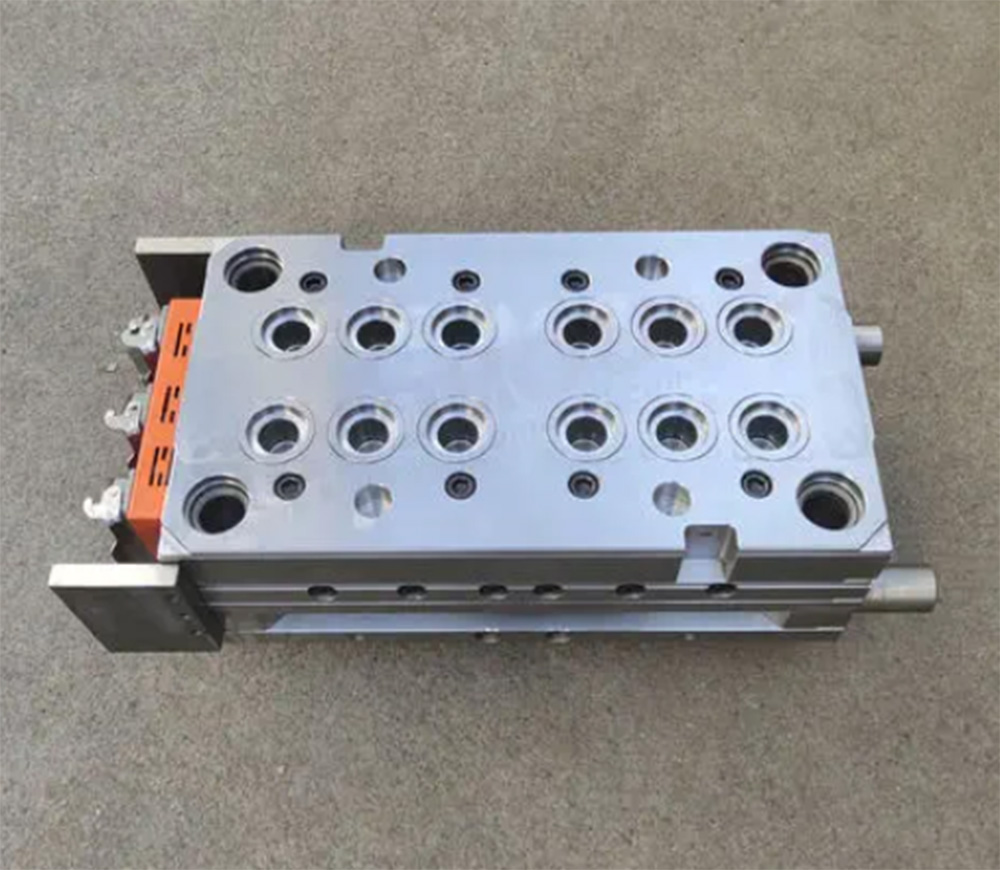
The steel you choose for your mold determines how long the mold will last, how many cycles it can run, and what defects you will see. Choose the wrong steel, and your mold will wear out early, crack unexpectedly, or rust from material corrosion. Choose the right steel, and your mold will run for millions of cycles with minimal maintenance.
Many mold buyers do not know how to evaluate steel. They see price differences but do not understand what they are paying for. This article explains mold steel selection for preform molds, cap molds, and blow molds. Meto provides specific recommendations for each mold type and each application.
Part 1: What Mold Steel Must Withstand
Before selecting steel, understand what the steel must endure.
Wear is the gradual loss of material from the cavity surface. PET and other plastics flow across the cavity at high speed and pressure. Over time, this erodes the steel. Wear causes dimensional changes and surface defects.
Thermal fatigue is cracking caused by repeated heating and cooling. The mold cavity heats up when plastic enters and cools down when cooling water flows. This cycle repeats millions of times. Poor steel cracks.
Corrosion is chemical attack from plastic degradation byproducts. PET can release acetic acid and other corrosive compounds. rPET and PCR materials are often more corrosive than virgin PET.
Compression and impact forces come from clamping pressure and injection pressure. The steel must be strong enough to withstand these forces without deforming.
Part 2: Key Steel Properties to Evaluate
Hardness is measured on the Rockwell C scale or HRC. Higher hardness means better wear resistance. Higher hardness also means more brittleness. The best mold steel balances hardness and toughness.
Toughness is the ability to resist cracking. Toughness decreases as hardness increases. A very hard steel may crack under impact. A slightly softer steel may wear faster but never crack.
Wear resistance is the ability to resist erosion from plastic flow. Wear resistance generally increases with hardness and carbide content.
Corrosion resistance is the ability to resist chemical attack from plastics and cooling water. Stainless steels have high corrosion resistance but lower hardness than tool steels.
Thermal conductivity is the ability to transfer heat. Higher thermal conductivity means faster cooling and shorter cycle times.
Polishing ability is how smooth the surface can become. High polishing ability is important for cosmetic bottles and clear preforms.
Part 3: Common Steel Grades for Molds
Here are the steel grades most commonly used for preform, cap, and blow molds.
P20 or 1.2311 is a general purpose mold steel. Hardness is 30 to 36 HRC. Wear resistance is low. Toughness is good. Corrosion resistance is low. Polishing ability is fair. Best for low volume production and prototypes. Expected life is 1 to 2 million cycles.
H11 or 1.2343 is a chromium hot work steel. Hardness is 46 to 52 HRC. Wear resistance is high. Toughness is good for its hardness. Corrosion resistance is low. Polishing ability is good. Best for high volume PET preform and cap molds. Expected life is 4 to 6 million cycles.
H13 or 1.2344 is similar to H11 with slightly different alloy composition. Hardness is 46 to 52 HRC. Properties are similar to H11. Best for extrusion blow molds and high temperature applications.
Stainless 420 or 1.2083 is a martensitic stainless steel. Hardness is 48 to 52 HRC. Wear resistance is good. Toughness is moderate. Corrosion resistance is high. Polishing ability is excellent. Best for rPET, cosmetic molds, and food contact applications. Expected life is 5 to 7 million cycles.
Stainless 316 or 1.4404 is an austenitic stainless steel. Hardness is lower at 20 to 25 HRC. Wear resistance is low. Corrosion resistance is very high. Best for cooling components and parts exposed to corrosive cooling water.
1.2767 is a nickel chrome steel with very high toughness. Hardness is 50 to 54 HRC. Wear resistance is very high. Toughness is excellent. Best for pinch off inserts in blow molds and high wear thread areas in cap molds. Expected life is 7 to 10 million cycles.
Part 4: Steel Selection for Preform Molds
Preform molds have unique demands. The neck finish area experiences high wear from plastic flow. The gate area experiences high stress. Cooling must be uniform for consistent crystallization.
For standard high volume PET preform production, Meto recommends H11 or 1.2343 with vacuum heat treatment. Hardness target is 48 to 52 HRC. Expected life is 4 to 6 million cycles.
For high volume production with abrasive materials such as high rPET content, Meto recommends H11 with plasma nitriding. The nitrided surface reaches 65 to 70 HRC while the core remains 48 to 52 HRC. Expected life is 6 to 8 million cycles.
For rPET and PCR materials which are corrosive, Meto recommends stainless 420 or 1.2083. Hardness is 48 to 52 HRC. Corrosion resistance prevents pitting. Expected life is 5 to 7 million cycles.
For low volume production under 2 million cycles per year, Meto recommends P20 or 1.2311. Hardness is 30 to 36 HRC. Expected life is 1 to 2 million cycles.
For prototype molds, Meto recommends P20 or even aluminum. Prototype molds run few cycles. Lower cost is the priority.
Part 5: Steel Selection for Cap Molds
Cap molds have different demands. The thread area experiences extreme wear from repeated unscrewing. The sealing surface must maintain precise dimensions. Cooling in the thread area is critical for cycle time.
For standard high volume cap production in HDPE or PP, Meto recommends H11 or 1.2343. Hardness is 48 to 52 HRC. Expected life is 5 to 7 million cycles.
For extreme wear applications such as very high volume caps or abrasive materials, Meto recommends 1.2767 for the thread area. Hardness is 50 to 54 HRC. Expected life is 7 to 10 million cycles.
For cosmetic caps requiring mirror finish, Meto recommends stainless 420 or 1.2083. Hardness is 48 to 52 HRC. Polishing ability is excellent. Corrosion resistance prevents staining.
For caps with high rPET content, Meto recommends stainless 420 for corrosion resistance.
For low volume cap production, Meto recommends P20 or 1.2311.
Part 6: Steel Selection for Blow Molds
Blow molds have different demands. The cavity surface must be smooth for bottle clarity. Pinch off edges experience high wear from clamping. Cooling must be uniform for consistent wall thickness.
For PET stretch blow molds, Meto recommends H11 or 1.2343. Hardness is 48 to 52 HRC. Polishing ability is good for bottle clarity. Expected life is 4 to 6 million cycles.
For extrusion blow molds, Meto recommends H13 or 1.2344 for the cavity. Hardness is 46 to 50 HRC. Toughness is important because extrusion blow molds experience higher clamping forces.
For pinch off inserts in extrusion blow molds, Meto recommends 1.2767. Hardness is 50 to 54 HRC. Wear resistance is excellent. Pinch off inserts can be replaced when worn.
For cosmetic bottle blow molds requiring high gloss, Meto recommends stainless 420 or 1.2083. Polishing ability is excellent. Mirror finish is achievable.
For blow molds running rPET, Meto recommends stainless 420 for corrosion resistance.
Part 7: Surface Treatments to Extend Steel Life
Steel selection is only part of the answer. Surface treatments can significantly extend mold life.
Plasma nitriding adds a hard surface layer to H11 or H13 steel. Surface hardness reaches 65 to 70 HRC. Core hardness remains 48 to 52 HRC. Case depth is 0.1 to 0.3 millimeters. Benefits include extreme wear resistance, reduced galling and sticking, and improved release. Best for preform neck finishes and high wear cap threads. Adds 30 to 50 percent to mold life.
PVD coating or physical vapor deposition adds a thin ceramic layer. Coating thickness is 2 to 5 microns. Hardness is 2000 to 3000 HV or 80 to 85 HRC equivalent. Benefits include very low friction and chemical resistance. Best for extreme wear applications. Cost is higher than nitriding.
Polishing improves surface finish. Standard finish is Ra 0.2 to 0.4 microns. Mirror finish is Ra 0.05 to 0.1 microns. Benefits include better part release and improved bottle clarity for cosmetic applications.
Part 8: Heat Treatment Quality Matters
Steel grade is important. Heat treatment is equally important. Poor heat treatment ruins good steel.
Meto requires vacuum heat treatment for all preform and cap mold steels. Vacuum heat treatment prevents oxidation and decarburization. Parts come out clean and bright with full surface hardness.
Meto requires double tempering for all H11, H13, and stainless steels. Single temper leaves retained austenite. Double temper ensures stable microstructure and prevents cracking.
Meto performs hardness testing on every cavity. Three points per cavity. Documented results. Any cavity outside the target range is re heat treated or rejected.
Part 9: Steel Selection Decision Table
Use this table to guide your steel selection.
For preform molds with annual volume under 2 million cycles, choose P20 or 1.2311. For volume of 2 to 10 million cycles with virgin PET, choose H11 or 1.2343. For volume over 10 million cycles with virgin PET, choose H11 with nitriding. For rPET or PCR materials, choose stainless 420 or 1.2083.
For cap molds with annual volume under 2 million cycles, choose P20. For volume of 2 to 10 million cycles, choose H11. For volume over 10 million cycles, choose H11 with nitriding for the thread area. For extreme wear, choose 1.2767 for thread inserts.
For PET stretch blow molds, choose H11 or H13. For extrusion blow mold cavities, choose H13. For extrusion blow mold pinch off inserts, choose 1.2767. For cosmetic blow molds, choose stainless 420.
Part 10: Cost vs Life Comparison
Steel choice affects both upfront cost and long term value.
A P20 preform mold costs approximately 40,000 US dollars for 32 cavities. Expected life is 2 million cycles. Cost per million cycles is 20,000 US dollars.
An H11 preform mold costs approximately 50,000 US dollars for 32 cavities. Expected life is 5 million cycles. Cost per million cycles is 10,000 US dollars.
An H11 with nitriding preform mold costs approximately 58,000 US dollars. Expected life is 7 million cycles. Cost per million cycles is 8,300 US dollars.
A stainless 420 preform mold costs approximately 55,000 US dollars. Expected life is 6 million cycles with rPET. Cost per million cycles is 9,200 US dollars.
The pattern is clear. Higher upfront cost delivers lower cost per million cycles. Do not choose steel based only on initial price. Choose based on total cost over the mold life.
Part 11: Common Steel Selection Mistakes
Mistake one is choosing P20 for high volume production. The mold will wear out quickly. You will buy multiple molds. Total cost will be higher than buying one H11 mold.
Mistake two is choosing stainless 420 when corrosion resistance is not needed. Stainless costs more than H11 but does not offer better wear resistance. Use stainless only when corrosion is a concern.
Mistake three is choosing the hardest steel available without considering toughness. Very hard steel cracks. Cracks ruin molds. Balance hardness with toughness.
Mistake four is ignoring heat treatment. Even the best steel fails with poor heat treatment. Verify that your mold supplier uses vacuum heat treatment and double tempering.
Mistake five is not using surface treatments for high volume applications. Nitriding adds life at reasonable cost. For high volume, nitriding pays for itself quickly.
Part 12: Meto Steel Standards
Meto uses only certified steel from reputable mills. Every steel block has a mill certificate showing chemical composition and source.
For standard high volume preform molds, Meto uses H11 or 1.2343. Vacuum heat treatment. Double tempering. Hardness 48 to 52 HRC. Nitriding optional.
For standard high volume cap molds, Meto uses H11 or 1.2343. Thread inserts available in 1.2767 for extreme wear.
For standard blow molds, Meto uses H13 or 1.2344. Pinch off inserts in 1.2767.
For rPET applications, Meto uses stainless 420 or 1.2083.
For cosmetic applications requiring high gloss, Meto uses stainless 420 with mirror polish.
Part 13: How to Verify Steel Quality
When evaluating a mold supplier, ask for documentation. Request mill certificates for the steel used in your mold. Verify that the certificate matches the steel grade specified.
Request heat treatment reports. The report should show time and temperature for each stage. It should show that vacuum furnace was used. It should show double tempering.
Request hardness test results. Every cavity should be tested. Results should be within the target range.
A supplier who cannot provide these documents is likely using uncertified steel or poor heat treatment. Walk away.
Part 14: Real Customer Examples
Customer A is a large water bottler in Southeast Asia. They previously used P20 preform molds. Life was 1.5 million cycles. They switched to Meto H11 with nitriding. Life is now 7 million cycles and still running.
Customer B is a CSD cap manufacturer in South America. They used H11 cap molds without nitriding. Life was 5 million cycles. They now use H11 with nitriding on thread inserts. Life is projected at 8 million cycles.
Customer C is an rPET bottle producer in Europe. They used H11 preform molds. The molds pitted from corrosion at 2 million cycles. They switched to Meto stainless 420. The molds have run 4 million cycles with no pitting.
Part 15: Conclusion
Steel selection is one of the most important decisions in mold buying. The right steel delivers millions of reliable cycles. The wrong steel causes early wear, cracking, and corrosion.
Use H11 for standard high volume preform and cap molds. Add nitriding for extreme wear. Use stainless 420 for rPET and corrosive materials. Use 1.2767 for high wear thread areas and pinch off inserts. Use P20 only for low volume or prototypes.
Heat treatment matters as much as steel grade. Require vacuum heat treatment and double tempering. Verify hardness on every cavity.
Meto provides certified steel, in house vacuum heat treatment, and full documentation. We help you select the right steel for your application. Not the cheapest. The right one.

Ruby
We can provide you with high-quality PET preform molds,cap molds,and blow molding machines.Looking forward to communicating and cooperating with you!
Helpline and Support
008613757660057