
Preform Yellowing or IV Drop? Meto Teaches You How to Diagnose Mold vs. Process Issues
Preform Yellowing or IV Drop? Meto Teaches You How to Diagnose Mold vs. Process Issues
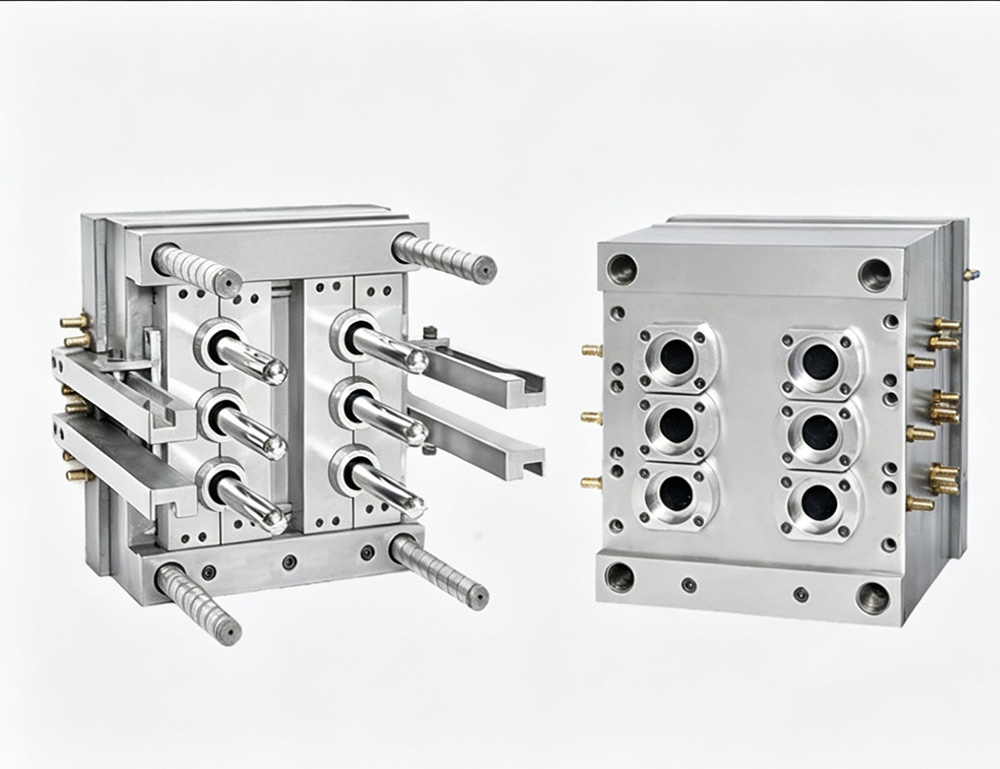
When PET preforms come out of the mold with a yellow tint, or when lab tests show the intrinsic viscosity (IV) has dropped, production engineers face an urgent question: is the problem in the mold, or is it in the process?
These two symptoms—yellowing and IV drop—are closely related. Both are signs of polymer degradation. PET chains break down under thermal or mechanical stress. When this happens, the material loses strength. Bottles blown from degraded preforms may fail under pressure. The barrier properties suffer. The material may even affect taste neutrality .
This article provides a systematic approach to diagnose the root cause. You will learn to separate process issues from mold issues, and you will get specific solutions for each.
Part 1: What Causes PET Degradation?
PET degrades when exposed to excessive heat, prolonged residence time in the barrel or hot runner, or high shear stress. Moisture accelerates degradation significantly .
Yellowing: The Visible Sign
Yellowing is caused by thermal oxidation. PET resin exposed to temperatures above 171°C (340°F) for extended periods will oxidize and turn yellow . Over-drying, overheating in the barrel, or long residence time in the hot runner are common causes .
IV Drop: The Hidden Problem
Intrinsic viscosity measures the molecular weight of PET. A drop in IV means the polymer chains are breaking. This directly affects bottle strength. IV drop often accompanies yellowing, but it can occur without visible color change. Moisture is the most common cause of IV drop .
Part 2: Process-Related Causes—Start Here
In most cases, yellowing and IV drop are process-related. Process issues are easier and cheaper to fix than mold modifications. Always eliminate process causes first.
2.1 Excessive Drying Temperature or Time
PET must be dried to below 50 ppm moisture before processing. But drying at too high a temperature or for too long causes oxidation.
Symptoms:
Yellowing throughout the preform, not just in one area
IV drop confirmed by lab test
Solutions:
Check dryer setpoint. Drying temperature should be 160-180°C depending on resin grade .
Check actual temperature at the hopper. Thermocouples can drift.
Verify residence time. The graph should show appropriate dwell time for the chosen drying temperature .
Avoid over-drying. If the resin has been in the dryer for more than 6-8 hours, it may be degrading.
2.2 Excessive Melt Temperature
The melt temperature at the nozzle should be 265-280°C. Temperatures above 285°C accelerate degradation rapidly .
Symptoms:
Yellowing appears on a regular basis, not just at startup
Process may show inconsistent viscosity
Solutions:
Reduce barrel temperatures. Generally, reduce by 2-5°C and observe results .
Reduce hot runner temperatures, especially nozzle zone temperatures .
Check melt temperature with a hand-held pyrometer or melt probe. Do not rely solely on barrel setpoints.
2.3 Prolonged Residence Time
PET degrades if it sits at high temperature too long. Residence time in the barrel and hot runner should be minimized.
Symptoms:
Yellowing is worse after machine stops or slow production periods
Variation in preform color at startup vs. steady state
Solutions:
Reduce cycle time to increase throughput. This reduces residence time.
For hot runners, the equation linking material grade, preform weight, maximum residence time, and hot runner volume can predict whether degradation will occur .
During shutdowns, purge the barrel and immediately reduce machine heats .
Turn off hot runner nozzle heats during system shutdowns. Keep chilled water flowing through the mold until the manifold drops below 100°C .
2.4 Excessive Shear Heat
High injection speeds, high screw speeds, or excessive back pressure generate frictional heat. This heat can push the melt temperature above the setpoint .
Symptoms:
Yellowing appears at the gate area first (high shear zone)
Solutions:
Monitor melt temperature as injection speed changes. The actual temperature may rise even if barrel setpoints are unchanged.
2.5 Moisture in the Resin
Moisture is the #1 cause of IV drop. It also contributes to yellowing through hydrolytic degradation .
Symptoms:
Preforms are brittle or show reduced blow-up ratio
IV drop confirmed by lab test
Solutions:
Measure moisture content of dried resin. Target is <50 ppm. Above 100 ppm is critical .
Check dryer dew point. Should be -40°C or lower.
Check dryer temperature. 160-180°C as recommended.
Check for air leaks in the dryer system. Ambient air entering the hopper re-moisturizes dried resin.
Protect dried resin from ambient humidity during transfer to the machine.
Part 3: Mold-Related Causes
If process adjustments fail to solve the problem, the mold itself may be contributing to degradation.
3.1 Hot Runner Hot Spots
Hot runners are designed to minimize residence time and pressure loss. But hot spots can occur at bends, at changes in channel diameter, or in poorly balanced manifolds .
Symptoms:
Yellowing appears consistently from specific cavities, not all cavities
The problem worsens with higher cavitation molds or longer flow paths
Solutions:
Check hot runner temperatures on a zone-by-zone basis. Some zones may need individual adjustment.
Consider whether the hot runner was designed for the specific preform weight and length. The same hot runner supplying 6g and 40g preforms creates vastly different residence times .
Clean the hot runner system. Degradation products can build up on nozzle tips and valve pins, affecting flow and creating hot spots .
3.2 Inadequate Venting
Volatile degradation byproducts (oligomers, aldehydes) must escape through mold vents. If vents are clogged or undersized, these gases may condense on the mold surface or remain trapped in the cavity .
Symptoms:
Yellowing accompanied by surface defects like burn marks or splay marks
The problem appears on cavities with specific vent locations (partial pattern)
Solutions:
Clean all vent channels. Vents typically have depths of 0.02-0.05mm and clog easily .
Check vent depth. Too shallow restricts flow; too deep causes flash.
Inspect vent surfaces. Laser-induced periodic surface structures (LIPSSs) can reduce material deposition and extend cleaning intervals .
3.3 Poor Gate Design
The gate area experiences the highest shear and heat in the entire mold. A poorly designed gate can cause localized degradation .
Symptoms:
Solutions:
Check gate diameter. A gate that is too small creates excessive shear.
Check gate geometry. Smooth transitions prevent flow turbulence.
Verify gate cooling. The gate area must cool quickly to prevent crystallization and degradation.
3.4 Cooling Imbalance
Uneven mold temperature can affect material flow and create hot spots .
Symptoms:
Yellowing appears in specific cavity zones
Preform quality varies with mold temperature changes
Solutions:
Use thermal imaging to check mold surface temperature. Variation should be ≤3°C across cavities.
Check cooling water flow. Scale or blockages reduce cooling efficiency.
Verify mold temperature setpoint against actual measurements.
Part 4: Diagnosis Flowchart
Use this step-by-step approach to identify the root cause:
Step 1: Check material
Measure moisture content of dried resin. Must be <50 ppm.
Check dryer operation (temperature, dew point, residence time).
Step 2: Check process parameters
Measure actual melt temperature at nozzle. Should be 265-280°C.
Check cycle time and residence time.
Check injection speed, screw speed, and back pressure.
Step 3: Observe the pattern
Yellowing all cavities? → Likely process issue (temperature, residence time, moisture).
Yellowing specific cavities? → Likely mold issue (hot runner imbalance, hot spots).
Yellowing at gate only? → Process shear or gate design issue.
Yellowing consistent over time? → Process parameter issue.
Yellowing worse after startups/stops? → Residence time issue.
Step 4: If process adjustments fail
Inspect hot runner temperatures zone by zone.
Clean hot runner nozzles and valve pins.
Clean mold vents.
Check gate design and cooling.
Part 5: Meto Support for Degradation Issues
Meto provides comprehensive support to diagnose and resolve preform yellowing and IV drop.
Process Assessment:
We review your drying process, machine settings, and material handling. We identify process issues before they cause degradation.
Hot Runner Audit:
Meto engineers inspect hot runner systems for hot spots, imbalance, and residence time issues. We provide recommendations for temperature settings, cleaning, or redesign.
Vent Inspection:
We check vent depths and cleanliness. We recommend vent modifications for better gas evacuation.
Material Recommendations:
We help you select the right steel for your application. For rPET or aggressive materials, stainless steel may be needed .
Conclusion: Systematic Diagnosis Solves the Problem
Yellowing and IV drop are signs of PET degradation. The root cause is almost always process-related—drying, temperature, residence time, or shear. Start by checking these process parameters. Only after eliminating process issues should you look at the mold.
Meto helps customers diagnose and solve degradation issues. We provide process audits, hot runner inspections, and mold modifications. If you are dealing with preform yellowing or IV drop, talk to Meto.
Contact Meto today for a degradation diagnosis. Send photos of your preforms and your process data. We will help you identify the root cause and provide solutions.

Ruby
We can provide you with high-quality PET preform molds,cap molds,and blow molding machines.Looking forward to communicating and cooperating with you!
Helpline and Support
008613757660057