
Heavy Parting Line on Blow Molded Bottles? Meto Shows You How to Find the Root Cause in Mold Structure
Heavy Parting Line on Blow Molded Bottles? Meto Shows You How to Find the Root Cause in Mold Structure
Introduction: The Problem of Heavy Parting Lines
A heavy parting line on a blow molded bottle is more than a cosmetic issue. It affects labeling, handling, and consumer perception. In some cases, a heavy parting line can compromise bottle strength . When the parting line is indented or protruding excessively, the root cause is often in the mold structure itself.
This article guides you through the mold structure factors that create heavy parting lines and shows how to diagnose and fix them.
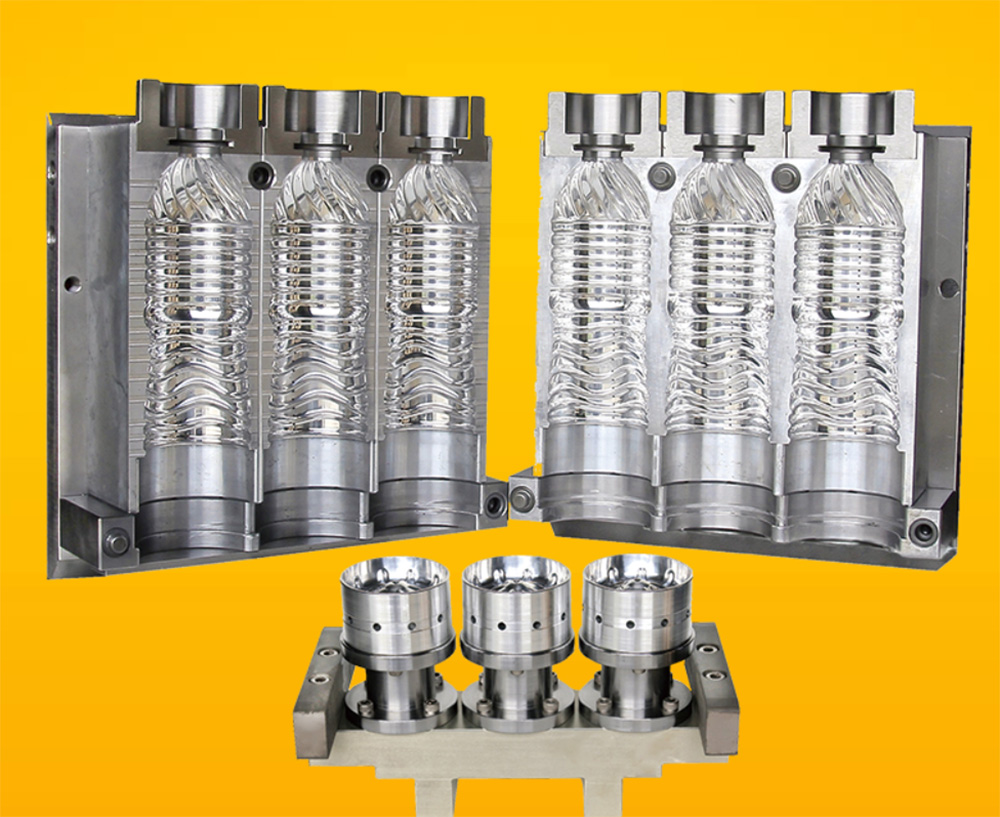
Part 1: What is a Parting Line and Why Does It Become Heavy?
The parting line is the seam where the two halves of a blow mold meet. In a well-designed and maintained mold, this line is barely visible. When the parting line becomes heavy, it appears as a raised ridge or "V" shape that pulls into the bottle surface .
The primary function of the parting line area is to seal the mold and allow the pinch-off to cut and weld the parison. When this seal is compromised, excess material escapes or the material distribution is uneven, creating a heavy or indented parting line .
Part 2: Mold Structure Root Cause 1 – Pinch-Off Land Design
The pinch-off land is the area at the bottom of the mold that cuts and seals the parison. Its design directly affects the parting line quality.
Too Short or Too Sharp a Pinch-Off Land:
If the land is too short or too sharp, it fails to force enough material into the weld line. The result is a weak weld that can thin out, creating an indented parting line .
Too Long a Pinch-Off Land:
Conversely, if the pinch-off land is too long, it forces too much material into the weld line. This prevents the molds from closing completely, leaving a thick pinch-off line that is apt to tear, resulting in a ragged, rough, or heavy parting line .
Recommended Standard:
For polyethylene blow molding, the common land length range is 0.010 to 0.015 inches (0.25 to 0.38 mm). This length provides a good balance between a strong weld and a trimmable pinch-off .
Part 3: Mold Structure Root Cause 2 – Misalignment
Misalignment of the mold halves creates gaps, allowing material to escape and form a heavy parting line.
Worn Locating Pins:
Worn locating pins cause the mold halves to mismatch, creating a step at the parting line. This leads to uneven pinch-off and flash .
Mold Clamp Pressure Uneven:
If the clamp pressure is uneven, the molds may not close and clamp evenly. This typically results in torn pinch-offs or heavy parting lines in one area and not another . In extreme cases, the mold clamp force may be insufficient to hold the mold closed against the internal pressure, causing the parting line to "blow" .
Mold Damage:
Nicks, burrs, or other damage in the pinch-off areas can create gaps that cause flash and heavy parting lines. These areas must be filled and reground .
Part 4: Mold Structure Root Cause 3 – Venting and Blow Pressure
Insufficient Blow Pressure or Poor Venting:
When the blow pressure is insufficient or the mold vents are clogged, air becomes trapped in the mold. This trapped air prevents the parison from fully contacting the mold cavity, resulting in an indented parting line that pulls into the bottle .
Solutions:
Part 5: Mold Structure Root Cause 4 – Parison Handling and Mold Closure
Molds Close Too Fast:
When the molds slam or snap shut, the parison can be pinched or torn before the blow process begins. This creates a heavy or ragged parting line and can damage the mold over time. Easing off the closing cycle helps make better welds .
Parison Tearing from Cold Stock:
If the stock temperature is too low, the parison may tear as the molds close, creating a hole or slit along the weld. This is a structure-related issue because it indicates the mold design is not compensating for material temperature variations. Raise the stock temperature in small increments until the tearing stops .
Part 6: Design Solutions from the Industry
Advanced mold designs address parting line issues at the source.
Design with End Parting Faces:
Patented mold designs incorporate end parting faces at the right and left ends of the pinch-off section. These end parting faces control lateral deformation of the parison and act as a barrier to stop resin flow. This prevents flash lines from developing on the bottle body and confines any flash to the underside of the bottom .
Central Angle Design:
Some mold designs incline the pinch-off line at a central angle (typically 45 degrees or less). This creates bent corners that further control flash development and maintain smooth parting lines, especially important for low blow ratio cosmetic containers .
Part 7: Meto's Approach – Structural Excellence
Meto designs blow molds with a focus on structural integrity to eliminate heavy parting lines:
Optimized Pinch-Off Geometry: We calculate the ideal pinch-off land length for your specific material and bottle design.
Precision Alignment Systems: Our molds use robust locating pins and precision machining to ensure perfect alignment every cycle.
Advanced Venting Solutions: We incorporate strategic venting to prevent trapped air, ensuring the parison fully contacts the cavity.
Stable Mold Closure: Our mold designs promote smooth, even closure to protect both the parison and the mold components.
Part 8: Troubleshooting Checklist
Use this checklist to diagnose a heavy parting line.
| Symptom | Possible Structural Cause | Recommended Action |
|---|---|---|
| Indented "V" shape parting line | Insufficient blow pressure or poor venting | Raise blow pressure, clean/improve vents |
| Thick, ragged parting line | Pinch-off land too long | Rework mold to reduce land length |
| Thin, weak weld | Pinch-off land too short or sharp | Adjust pinch-off land length |
| Uneven parting line (one area only) | Worn locating pins or uneven clamp pressure | Replace pins, adjust clamp pressure |
| Flash on one side only | Mold misalignment or damage | Inspect and repair mold |
| Parting line tear during trimming | Land too long or worn pinch-offs | Refurbish pinch-off lands |
Conclusion: Fixing the Structure Fixes the Part
A heavy parting line is almost always a cry for help from your mold structure. Whether it's the pinch-off land, alignment, venting, or closure, the root cause is in the mold.
At Meto, we don't just sell molds; we engineer solutions. Our blow molds are designed for precision, durability, and defect-free production. If you are struggling with heavy parting lines, it's time to look under the hood.
Contact Meto today to discuss your blow mold challenges. Send us photos of your defective bottles. We will diagnose the structural cause and provide a solution.

Ruby
We can provide you with high-quality PET preform molds,cap molds,and blow molding machines.Looking forward to communicating and cooperating with you!
Helpline and Support
008613757660057