
From Steel to Heat Treatment: The Technical Code of Meto Preform Mold Durability
From Steel to Heat Treatment: The Technical Code of Meto Preform Mold Durability
A preform mold that wears out after one million cycles costs more than money. It costs downtime, rejected preforms, and customer trust. A durable preform mold that runs for five, six, or seven million cycles delivers lower cost per preform and fewer production interruptions.
What separates a short-lived mold from a long-lived one? The answer lies in two interconnected factors: steel selection and heat treatment. Get these right, and the mold will run for years. Get them wrong, and nothing else matters.
This article explains Meto‘s approach to steel and heat treatment — the technical code behind our preform mold durability.
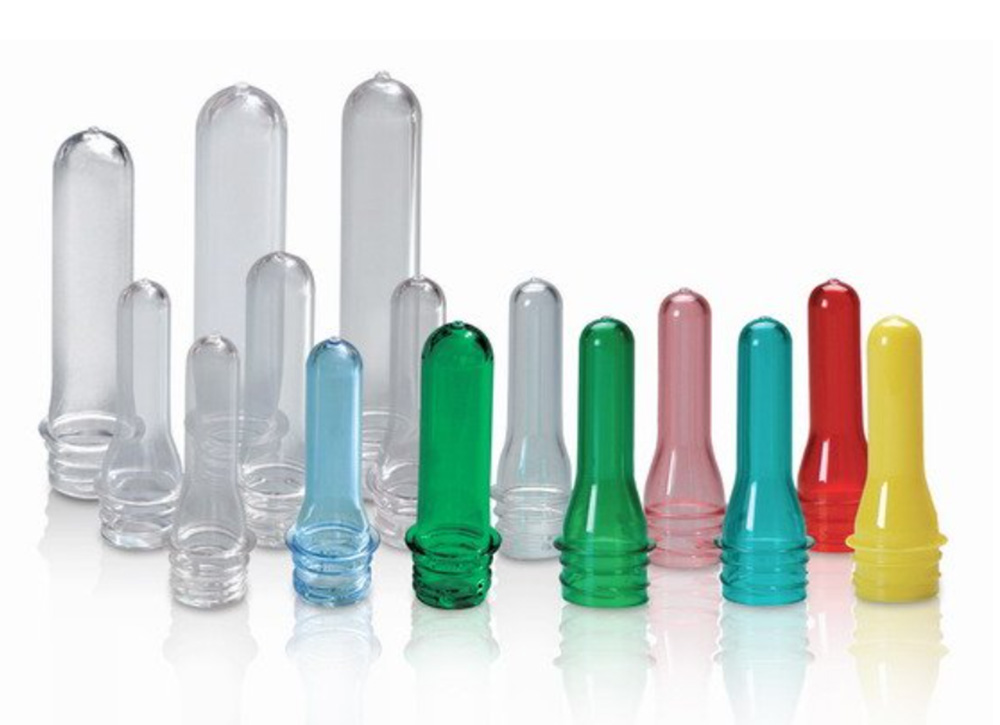
Part 1: Steel — The Foundation of Durability
Every durable preform mold starts with the right steel. Not all tool steels are the same. Meto selects steel grades specifically for the demands of PET preform molding.
1.1 What Preform Mold Steel Must Withstand
The steel in a preform mold cavity faces three simultaneous attacks:
| Threat | Cause | Consequence |
|---|---|---|
| Wear | PET flow across cavity surface | Loss of dimensional accuracy |
| Thermal fatigue | Repeated heating and cooling (100–170°C cycles) | Cracking (heat check) |
| Corrosion | PET degradation byproducts (acetic acid, aldehydes) | Surface pitting |
Good steel resists all three. Cheap steel fails at one or more.
1.2 Meto‘s Standard Steel Grades
| Steel Grade (DIN) | Hardness Range | Best For | Expected Life |
|---|---|---|---|
| 1.2311 (P20) | 30–36 HRC | Prototypes, low-volume (<2M cycles) | 1–2 million cycles |
| 1.2343 (H11) | 46–52 HRC | Standard high-volume production | 4–6 million cycles |
| 1.2343 + nitriding | 48–52 HRC (core), 65–70 HRC (surface) | Extreme wear, abrasive conditions | 6–8 million cycles |
| 1.2083 (420 stainless) | 48–52 HRC | rPET, PCR, corrosive materials | 5–7 million cycles |
Meto‘s standard for high-volume preform molds: 1.2343 (H11) with vacuum heat treatment. This steel offers the best balance of wear resistance, toughness, and thermal stability.
1.3 Why Not Just Use Harder Steel?
Some buyers ask for the hardest steel available. Harder is not always better. Steel that is too hard becomes brittle. Brittle steel cracks under the mechanical stress of injection and ejection.
Meto targets 48–52 HRC for preform mold cavities. This range provides excellent wear resistance while maintaining toughness. For extreme applications, we add surface hardening (nitriding) to reach 65–70 HRC at the surface while keeping the core tough.
1.4 Steel Certification and Traceability
Meto does not accept uncertified steel. Every block of steel entering our facility has a mill certificate showing:
Chemical composition (carbon, chromium, molybdenum, vanadium, etc.)
Heat treatment history (as-received condition)
Source and batch number
We retain these certificates for the life of the mold. If a problem appears years later, we can trace it back to the original steel batch.
Part 2: From Raw Steel to Cavity — The Machining Path
Before heat treatment, the steel must be shaped. Meto‘s machining process is designed to prepare the steel for optimal heat treatment response.
2.1 Rough Machining
The steel block arrives in annealed (soft) condition. Meto rough machines the cavity to within 1–2mm of final dimensions.
Why rough machining before heat treatment:
Soft steel machines faster and with lower tool wear
Removes surface decarburization from the mill
Reduces the mass that must be heated during hardening
2.2 Stress Relieving
After rough machining, residual stresses remain in the steel from the rolling and roughing processes. If not removed, these stresses cause distortion during final machining or heat treatment.
Meto stress-relieves every preform mold cavity before heat treatment:
| Parameter | Specification |
|---|---|
| Temperature | 500–650°C (depending on steel grade) |
| Soak time | 2–4 hours |
| Cooling | Slow furnace cool |
| Result | 80–90% stress reduction |
2.3 Final Machining (Pre-Heat Treatment)
After stress relieving, Meto performs finish machining to within 0.3–0.5mm of final dimensions. This leaves a small “stock allowance” for final finishing after hardening.
Part 3: Heat Treatment — Where Steel Becomes a Mold
Heat treatment transforms soft, machinable steel into hard, wear-resistant tooling. Meto performs all heat treatment in-house using vacuum furnaces.
3.1 Why Vacuum Heat Treatment?
Traditional heat treatment in atmosphere furnaces exposes steel to oxygen. The result: oxidation (scale) and decarburization (loss of surface carbon). Both damage mold performance.
Vacuum heat treatment advantages:
| Feature | Benefit |
|---|---|
| No oxygen | Zero oxidation — bright, clean surfaces |
| No decarburization | Maintains surface hardness |
| Uniform temperature | ±5°C across entire furnace load |
| Programmable cycles | Precise control of heating and cooling rates |
| Clean operation | No salt bath residues or messy quenching oils |
3.2 The Vacuum Heat Treatment Cycle for 1.2343 Steel
| Step | Temperature | Duration | What Happens |
|---|---|---|---|
| Preheating | 650°C | 30 min | Gradual warming, prevents thermal shock |
| Austenitizing | 1020–1050°C | 45–60 min | Carbides dissolve into solution |
| High-pressure gas quench | N₂ at 5–10 bar | Rapid cooling | Forms martensite (hard phase) |
| First temper | 560–580°C | 2 hours | Reduces brittleness, relieves quenching stress |
| Second temper | 540–560°C | 2 hours | Achieves final hardness, stabilizes microstructure |
Why two tempers? Single temper leaves retained austenite — unstable structure that can transform later, causing dimensional changes. Double temper ensures stable, tough microstructure.
3.3 Hardness Verification
After heat treatment, Meto tests every cavity for hardness:
Method: Rockwell (HRC) on C-scale
Locations: Three points per cavity (neck, body, bottom)
Acceptance range: Target ±2 HRC (e.g., 49–51 HRC)
Documentation: Hardness report included with mold
Cavities outside the acceptance range are re-heat-treated or rejected. No exceptions.
Part 4: Surface Enhancement — Taking Durability Further
For customers requiring extreme wear resistance, Meto adds surface treatments after heat treatment.
4.1 Plasma Nitriding
Plasma nitriding adds a hard, wear-resistant layer to the cavity surface while leaving the core tough.
| Parameter | Specification |
|---|---|
| Temperature | 480–520°C |
| Atmosphere | Nitrogen-hydrogen plasma |
| Case depth | 0.1–0.3mm |
| Surface hardness | 900–1100 HV (65–70 HRC equivalent) |
| Core hardness | Unchanged (48–52 HRC) |
Benefits of nitriding for preform molds:
Extreme wear resistance on neck finish threads
Reduced galling (PET sticking to cavity)
Improved release (smoother surface)
No dimensional change (low-temperature process)
When Meto recommends nitriding:
High cavitation (32+ cavities)
Abrasive materials (high rPET content, glass-filled)
Target mold life above 6 million cycles
4.2 PVD Coating (Optional)
For specialized applications, Meto offers PVD (Physical Vapor Deposition) coatings:
| Coating Type | Hardness (HV) | Friction Coefficient | Best For |
|---|---|---|---|
| TiN (Titanium Nitride) | 2300 | 0.4–0.5 | General wear resistance |
| CrN (Chromium Nitride) | 1800 | 0.3–0.4 | Corrosion resistance, low friction |
| AlTiN (Aluminum Titanium Nitride) | 3200 | 0.3–0.4 | High-temperature applications |
PVD is typically reserved for the most demanding applications due to its higher cost.
Part 5: The Cost of Getting Steel and Heat Treatment Wrong
Understanding what goes into a durable preform mold is important. Understanding the consequences of shortcuts is equally important.
Common Failure Modes — And Their Root Causes
| Failure Mode | Root Cause | Cost Consequence |
|---|---|---|
| Neck finish wear after 1M cycles | Poor steel grade (P20 for high-volume) | Mold unusable, early replacement |
| Cavity cracking | Single temper only (brittle) | Sudden mold failure, line stoppage |
| Surface pitting | No corrosion resistance (using carbon steel for rPET) | Preform surface defects |
| Dimensional drift | No stress relieving | Inconsistent preform weight |
| Gate area wear | No surface hardening | Short life at high-flow area |
Meto vs. Low-Cost Supplier — Material Differences
| Factor | Low-Cost Supplier | Meto |
|---|---|---|
| Steel grade | Generic “tool steel” or P20 | Certified 1.2343 (H11) for high-volume |
| Heat treatment | Outsourced, single temper | In-house vacuum, double temper |
| Hardness testing | Spot check (one per 10 cavities) | Every cavity, three points |
| Stress relieving | Often skipped | Always performed |
| Surface treatment | Rarely offered | Nitriding standard for high-volume |
| Traceability | None | Full mill certificate + batch trace |
The low-cost mold may cost 30–40% less initially. Over five million cycles, it will cost more in downtime, rejects, and early replacement.
Part 6: Real Customer Results — What Proper Steel and Heat Treatment Deliver
Customer A: Large Water Bottler (Southeast Asia)
| Specification | Value |
|---|---|
| Mold cavitation | 32 cavities |
| Steel grade | 1.2343 + nitriding |
| Hardness | 50 HRC core, 1000+ HV surface |
| Target life | 6 million cycles |
Result after 18 months: Mold at 4.2 million cycles. Neck finish wear under 0.01mm. No cracking. No pitting. Projected to reach 7+ million cycles.
Customer B: CSD Bottler (South America)
| Specification | Value |
|---|---|
| Mold cavitation | 48 cavities |
| Steel grade | 1.2343 (no nitriding) |
| Hardness | 49–51 HRC |
| Target life | 5 million cycles |
Result after 12 months: Mold at 2.8 million cycles. All cavities within hardness spec. Customer ordered second identical mold.
Customer C: rPET Bottler (Europe)
| Specification | Value |
|---|---|
| Mold cavitation | 24 cavities |
| Steel grade | 1.2083 (420 stainless) |
| Hardness | 48–50 HRC |
| Special requirement | Corrosion resistance for recycled PET |
Result after 10 months: No corrosion pitting. Surface finish unchanged. Previous carbon steel mold showed pitting at 6 months.
Part 7: Meto‘s Quality Assurance — From Steel Receipt to Mold Shipment
Every preform mold follows the same quality path:
Receiving Inspection
Spectrometer verification of steel chemistry
Ultrasonic testing for internal flaws
Hardness check (as-received)
In-Process Inspection
CMM check after rough machining
CMM check after finish machining
Cooling channel flow test
Post-Heat Treatment Inspection
Hardness test (every cavity, three points)
Metallurgical sample (one per heat treatment batch)
Dimensional check for distortion
Final Inspection
Cavity surface finish measurement (Ra)
Neck finish gauge testing
Trial molding (sample preforms measured)
Documentation
Mill certificate (steel)
Heat treatment report (time-temperature chart)
Hardness report (cavity by cavity)
CMM report
Trial molding report (weights, dimensions)
This documentation is provided to every customer. You do not have to trust Meto‘s claims — you can see the data.
Conclusion: Durability Is Engineered, Not Accidental
A durable preform mold does not happen by chance. It is the result of deliberate choices at every step:
Right steel grade for the application volume and material
Stress relieving to prevent distortion
In-house vacuum heat treatment with double tempering
Hardness verification on every cavity
Surface enhancement (nitriding) for extreme wear
Full traceability from mill certificate to finished mold
Meto applies this technical code to every preform mold we build — whether 2 cavities or 48 cavities, whether standard PET or recycled rPET.
When you buy a Meto preform mold, you are not buying a commodity. You are buying millions of reliable cycles, backed by metallurgical science and process control.

Ruby
We can provide you with high-quality PET preform molds,cap molds,and blow molding machines.Looking forward to communicating and cooperating with you!
Helpline and Support
008613757660057